Buy enerfish.eu ?
We are moving the project
enerfish.eu .
Are you interested in purchasing the domain
enerfish.eu ?
domain@kv-gmbh.de · 0541-91531010
Buy enerfish.eu ?
'Will + participle 2?'
"Will + participle 2" is a construction used to form the future perfect tense in English. It is used to indicate an action that will be completed before a specific point in the future. This construction is formed by using the auxiliary verb "will" followed by the past participle of the main verb. For example, "By the time you arrive, I will have finished my homework." **
What are the Latin forms of the present participle, perfect passive participle, and future active participle?
The Latin present participle is formed by adding -ns, -ntis to the present stem of the verb. For example, the present participle of the verb "amo" (I love) is "amans, amantis" (loving). The perfect passive participle is formed by adding -us, -a, -um to the verb stem. For example, the perfect passive participle of the verb "amo" is "amatus, amata, amatum" (loved). The future active participle is formed by adding -urus, -ura, -urum to the verb stem. For example, the future active participle of the verb "amo" is "amaturus, amatura, amaturum" (about to love). **

Similar search terms for Participle
Top-Angebote
Products related to Participle:
-
Porch & Den Inez Energy-efficient Sidelight Curtain Panel, Single PanelKeep your entryway private with this stylish sidelight curtain panel. Constructed from polyester, this panel is energy-efficient and machine-washable for convenient cleaning. Choose from six neutral color options to pair with your decor.27,48 $*Shipping: 0,00 $Secure redirect to the provider
-
All Categories Goods LED Solar Motion Sensor Outdoor Security Wall Lights Waterproof & Energy Efficient LED Solar Motion Sensor Outdoor Security Wall Lights Waterproof & Energy EfficientIlluminate your home with the power of the sun with the 1 pc of 168 LED Solar Motion Sensor Outdoor Security Wall Lights. Designed for homeowners seeking reliable, ecofriendly lighting solutions, these outdoor lights offer superior security and...44,97 $*Shipping: 0,00 $Secure redirect to the provider
-
Yeego 60-Can Direct-Cool Beverage Cooler, Energy-Efficient Mini FridgeThe Yeego Beverage Refrigerator brings a refined balance of form and function, offering a sleek, compact design that fits effortlessly into kitchens, home bars, or entertainment spaces.198,72 $*Shipping: 0,00 $Secure redirect to the provider
-
All Categories Goods LED Flat Panel Light Recessed Ceiling Light, Energy Efficient, Bright Lighting Solution LED Flat Panel Light Recessed Ceiling Light, Energy Efficient, Bright Lighting SolutionUpgrade your home or office with these 2 pcs of sleek and energyefficient 48W LED flat panel light. Designed for recessed ceiling installations, this lighting solution offers an ultrabright 7000K daylight output with an impressive 5800LM brightness....229,97 $*Shipping: 0,00 $Secure redirect to the provider


-
What are participle clauses?
Participle clauses are a type of clause that uses a present participle (-ing form) or a past participle (-ed form) to provide additional information about the subject of the main clause. They can be used to show simultaneous actions, cause and effect, or to provide descriptive details. For example, in the sentence "Feeling tired, she decided to go to bed," the participle clause "Feeling tired" provides additional information about the subject "she." **
-
What is a participle?
A participle is a form of a verb that can function as an adjective or be part of a verb phrase. There are two types of participles in English: the present participle, which ends in -ing (e.g. "walking"), and the past participle, which can end in -ed, -en, -d, -t, -n, or -ne (e.g. "broken"). Participles are used to modify nouns or pronouns, and they can also be used to form verb tenses such as the present perfect or past perfect. **
-
What is the difference between the past participle and the present participle?
The past participle is a verb form used to indicate a completed action or state that occurred in the past. It is often used with auxiliary verbs to form the perfect tenses (e.g., "has eaten," "had gone"). The present participle, on the other hand, is a verb form used to indicate an ongoing action or state in the present or future. It is formed by adding "-ing" to the base form of the verb and is used to create the progressive tenses (e.g., "is eating," "will be going"). **
-
How can the terms premature, simultaneous, and subsequent be explained in relation to past participle, present participle, and future participle?
The terms premature, simultaneous, and subsequent can be explained in relation to past participle, present participle, and future participle based on their timing in relation to the action of the verb. The past participle refers to an action that has already been completed, making it premature in relation to the present moment. The present participle refers to an action that is happening at the same time as something else, making it simultaneous. The future participle refers to an action that will happen at a later time, making it subsequent to the present moment. These terms help to clarify the timing of the action in relation to the verb. **


What is a nominalized participle?
A nominalized participle is a verb form that has been turned into a noun. This is done by adding a suffix to the participle form of the verb, which allows it to function as a noun in a sentence. Nominalized participles are commonly used in various languages to express actions or qualities in a more abstract or general way. **
What is a substantivized participle?
A substantivized participle is a verb form that has been turned into a noun by adding a definite article and declining it for case, gender, and number. In other words, it is a participle that has been transformed into a noun and can function as a subject, object, or complement in a sentence. This process allows the participle to take on the characteristics of a noun while still retaining some of its verbal qualities. **
Top-Angebote
Products related to Participle:
-
Rueber Innovative Hair Energy Nourishing Booster Treatment 12x10mLA hair-care product for hair loss or thinning. It a nourishing treatment designed to tone the scalp and prevent hair loss. Its liposomal capacity allows nutrients to achieve high effectiveness, addressing general malnutrition and alopecia concerns. Prevents hair loss and promotes scalp health. Lightweight, non-greasy formula.27,37 £*Shipping: 5,34 £Secure redirect to the provider
-
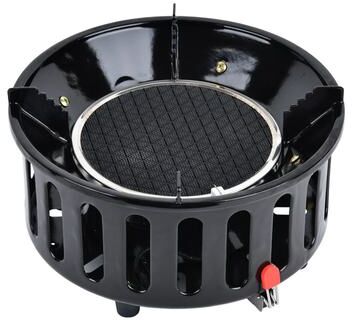
Youfap Market Energy Efficient Camping Butane Stove, Portable Propane Burner For Outdoor Adventures Energy Efficient Camping Butane Stove, Portable Propane Burner For Outdoor AdventuresReady for your next outdoor adventure The Camping Butane Stove is the perfect solution for quick, efficient cooking on the go. Whether you're embarking on a weekend camping trip or enjoying a family picnic, this energysaving stove ensures you can...124,97 $*Shipping: 0,00 $Secure redirect to the provider
-
Porch & Den Inez Energy-efficient Sidelight Curtain Panel, Single PanelKeep your entryway private with this stylish sidelight curtain panel. Constructed from polyester, this panel is energy-efficient and machine-washable for convenient cleaning. Choose from six neutral color options to pair with your decor.27,48 $*Shipping: 0,00 $Secure redirect to the provider
-
All Categories Goods LED Solar Motion Sensor Outdoor Security Wall Lights Waterproof & Energy Efficient LED Solar Motion Sensor Outdoor Security Wall Lights Waterproof & Energy EfficientIlluminate your home with the power of the sun with the 1 pc of 168 LED Solar Motion Sensor Outdoor Security Wall Lights. Designed for homeowners seeking reliable, ecofriendly lighting solutions, these outdoor lights offer superior security and...44,97 $*Shipping: 0,00 $Secure redirect to the provider
-
'Will + participle 2?'
"Will + participle 2" is a construction used to form the future perfect tense in English. It is used to indicate an action that will be completed before a specific point in the future. This construction is formed by using the auxiliary verb "will" followed by the past participle of the main verb. For example, "By the time you arrive, I will have finished my homework." **
-
What are the Latin forms of the present participle, perfect passive participle, and future active participle?
The Latin present participle is formed by adding -ns, -ntis to the present stem of the verb. For example, the present participle of the verb "amo" (I love) is "amans, amantis" (loving). The perfect passive participle is formed by adding -us, -a, -um to the verb stem. For example, the perfect passive participle of the verb "amo" is "amatus, amata, amatum" (loved). The future active participle is formed by adding -urus, -ura, -urum to the verb stem. For example, the future active participle of the verb "amo" is "amaturus, amatura, amaturum" (about to love). **
-
What are participle clauses?
Participle clauses are a type of clause that uses a present participle (-ing form) or a past participle (-ed form) to provide additional information about the subject of the main clause. They can be used to show simultaneous actions, cause and effect, or to provide descriptive details. For example, in the sentence "Feeling tired, she decided to go to bed," the participle clause "Feeling tired" provides additional information about the subject "she." **
-
What is a participle?
A participle is a form of a verb that can function as an adjective or be part of a verb phrase. There are two types of participles in English: the present participle, which ends in -ing (e.g. "walking"), and the past participle, which can end in -ed, -en, -d, -t, -n, or -ne (e.g. "broken"). Participles are used to modify nouns or pronouns, and they can also be used to form verb tenses such as the present perfect or past perfect. **
Similar search terms for Participle
-
Yeego 60-Can Direct-Cool Beverage Cooler, Energy-Efficient Mini FridgeThe Yeego Beverage Refrigerator brings a refined balance of form and function, offering a sleek, compact design that fits effortlessly into kitchens, home bars, or entertainment spaces.198,72 $*Shipping: 0,00 $Secure redirect to the provider
-
All Categories Goods LED Flat Panel Light Recessed Ceiling Light, Energy Efficient, Bright Lighting Solution LED Flat Panel Light Recessed Ceiling Light, Energy Efficient, Bright Lighting SolutionUpgrade your home or office with these 2 pcs of sleek and energyefficient 48W LED flat panel light. Designed for recessed ceiling installations, this lighting solution offers an ultrabright 7000K daylight output with an impressive 5800LM brightness....229,97 $*Shipping: 0,00 $Secure redirect to the provider
-
Kesnos Energy Star Most Efficient Dehumidifier, 52 Pints for 4,500 Sq. Ft.Kesnos Energy Star Most Efficient 2024 Dehumidifier removes up to 52 pints of moisture per day, covering up to 4,500 sq. ft. With adjustable humidity control (30-80% RH), multiple modes, and energy-saving features. Powerful 4,500 Sq. Ft.210,99 $*Shipping: 0,00 $Secure redirect to the provider
-
HomeDecorAndMore LLC Waterproof Energy Efficient Flickering Solar Flame Lights 2 Torch PackLooking to add a magical touch to your outdoor space Look no further than our Solar Flame Lights, the perfect solution for those seeking to create a captivating ambiance without the high cost or hassle of traditional lighting options. With many...48,97 $*Shipping: 0,00 $Secure redirect to the provider
-
What is the difference between the past participle and the present participle?
The past participle is a verb form used to indicate a completed action or state that occurred in the past. It is often used with auxiliary verbs to form the perfect tenses (e.g., "has eaten," "had gone"). The present participle, on the other hand, is a verb form used to indicate an ongoing action or state in the present or future. It is formed by adding "-ing" to the base form of the verb and is used to create the progressive tenses (e.g., "is eating," "will be going"). **
-
How can the terms premature, simultaneous, and subsequent be explained in relation to past participle, present participle, and future participle?
The terms premature, simultaneous, and subsequent can be explained in relation to past participle, present participle, and future participle based on their timing in relation to the action of the verb. The past participle refers to an action that has already been completed, making it premature in relation to the present moment. The present participle refers to an action that is happening at the same time as something else, making it simultaneous. The future participle refers to an action that will happen at a later time, making it subsequent to the present moment. These terms help to clarify the timing of the action in relation to the verb. **
-
What is a nominalized participle?
A nominalized participle is a verb form that has been turned into a noun. This is done by adding a suffix to the participle form of the verb, which allows it to function as a noun in a sentence. Nominalized participles are commonly used in various languages to express actions or qualities in a more abstract or general way. **
-
What is a substantivized participle?
A substantivized participle is a verb form that has been turned into a noun by adding a definite article and declining it for case, gender, and number. In other words, it is a participle that has been transformed into a noun and can function as a subject, object, or complement in a sentence. This process allows the participle to take on the characteristics of a noun while still retaining some of its verbal qualities. **
* All prices are inclusive of VAT and, if applicable, plus shipping costs. The offer information is based on the details provided by the respective shop and is updated through automated processes. Real-time updates do not occur, so deviations can occur in individual cases. ** Note: Parts of this content were created by AI.