Buy enerfish.eu ?
We are moving the project
enerfish.eu .
Are you interested in purchasing the domain
enerfish.eu ?
domain@kv-gmbh.de · 0541-91531010
Buy enerfish.eu ?
How can one convert the energy of different photons into monochromatic photons?
One way to convert the energy of different photons into monochromatic photons is through a process called frequency doubling or second harmonic generation. This involves passing the photons through a nonlinear crystal, which causes the photons to combine and create new photons with double the frequency and half the wavelength of the original photons. This results in monochromatic photons with a single, specific wavelength. Another method is through the use of filters or monochromators, which can selectively filter out photons of specific wavelengths, allowing only monochromatic photons to pass through. **
How do you calculate the energy of photons?
The energy of a photon can be calculated using the equation E = hf, where E is the energy of the photon, h is Planck's constant (6.626 x 10^-34 J*s), and f is the frequency of the photon in hertz. Alternatively, the energy of a photon can also be calculated using the equation E = hc/λ, where c is the speed of light (3.00 x 10^8 m/s) and λ is the wavelength of the photon in meters. By using either of these equations, one can determine the energy carried by a photon based on its frequency or wavelength. **

Similar search terms for Photons
Top-Angebote
Products related to Photons:
-
All Categories Goods LED Solar Motion Sensor Outdoor Security Wall Lights Waterproof & Energy Efficient LED Solar Motion Sensor Outdoor Security Wall Lights Waterproof & Energy EfficientIlluminate your home with the power of the sun with the 1 pc of 168 LED Solar Motion Sensor Outdoor Security Wall Lights. Designed for homeowners seeking reliable, ecofriendly lighting solutions, these outdoor lights offer superior security and...44,97 $*Shipping: 0,00 $Secure redirect to the provider
-
Yeego 60-Can Direct-Cool Beverage Cooler, Energy-Efficient Mini FridgeThe Yeego Beverage Refrigerator brings a refined balance of form and function, offering a sleek, compact design that fits effortlessly into kitchens, home bars, or entertainment spaces.202,72 $*Shipping: 0,00 $Secure redirect to the provider
-
All Categories Goods LED Flat Panel Light Recessed Ceiling Light, Energy Efficient, Bright Lighting Solution LED Flat Panel Light Recessed Ceiling Light, Energy Efficient, Bright Lighting SolutionUpgrade your home or office with these 2 pcs of sleek and energyefficient 48W LED flat panel light. Designed for recessed ceiling installations, this lighting solution offers an ultrabright 7000K daylight output with an impressive 5800LM brightness....229,97 $*Shipping: 0,00 $Secure redirect to the provider
-
Kesnos Energy Star Most Efficient Dehumidifier, 52 Pints for 4,500 Sq. Ft.Kesnos Energy Star Most Efficient 2024 Dehumidifier removes up to 52 pints of moisture per day, covering up to 4,500 sq. ft. With adjustable humidity control (30-80% RH), multiple modes, and energy-saving features. Powerful 4,500 Sq. Ft.210,99 $*Shipping: 0,00 $Secure redirect to the provider


-
Are photons electrons?
No, photons are not electrons. Photons are elementary particles that make up light and electromagnetic radiation, while electrons are negatively charged subatomic particles that are part of atoms. Photons have no mass and travel at the speed of light, while electrons have mass and are bound to the nucleus of an atom. **
-
How are photons created?
Photons are created through a process called electromagnetic radiation. This occurs when an atom absorbs energy, causing its electrons to move to a higher energy level. When the electrons return to their original energy level, they release the absorbed energy in the form of photons. This process can happen in various ways, such as through thermal radiation, chemical reactions, or nuclear reactions. **
-
What happens to photons?
Photons are elementary particles that make up light. They do not have mass and travel at the speed of light. When photons interact with matter, they can be absorbed, reflected, or transmitted. Absorption of photons can result in the excitation of electrons, leading to various physical and chemical processes. **
-
Do photons with higher or lower energy experience stronger attenuation?
Photons with higher energy experience stronger attenuation. This is because higher energy photons have a greater ability to interact with matter, leading to increased chances of absorption or scattering. As a result, higher energy photons are more likely to be attenuated as they pass through a material, making them more effective for processes such as medical imaging and radiation therapy. **


What are photons made of?
Photons are elementary particles, which means they are not made up of smaller components. They are the basic unit of light and electromagnetic radiation, and they have no mass and no electric charge. Photons are considered to be the force carriers for the electromagnetic force, and they exhibit both wave-like and particle-like properties. In quantum mechanics, photons are described as excitations of the electromagnetic field. **
How far do photons travel?
Photons, as particles of light, travel at the speed of light in a vacuum, which is approximately 299,792 kilometers per second. This means that photons can travel vast distances in a very short amount of time. However, their travel distance can be affected by factors such as absorption, reflection, and scattering, which can cause them to be absorbed or redirected before reaching their destination. **
Top-Angebote
Products related to Photons:
-
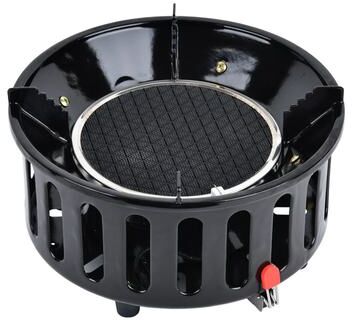
Youfap Market Energy Efficient Camping Butane Stove, Portable Propane Burner For Outdoor Adventures Energy Efficient Camping Butane Stove, Portable Propane Burner For Outdoor AdventuresReady for your next outdoor adventure The Camping Butane Stove is the perfect solution for quick, efficient cooking on the go. Whether you're embarking on a weekend camping trip or enjoying a family picnic, this energysaving stove ensures you can...124,97 $*Shipping: 0,00 $Secure redirect to the provider
-
Porch & Den Inez Energy-efficient Sidelight Curtain Panel, Single PanelKeep your entryway private with this stylish sidelight curtain panel. Constructed from polyester, this panel is energy-efficient and machine-washable for convenient cleaning. Choose from six neutral color options to pair with your decor.27,48 $*Shipping: 0,00 $Secure redirect to the provider
-
All Categories Goods LED Solar Motion Sensor Outdoor Security Wall Lights Waterproof & Energy Efficient LED Solar Motion Sensor Outdoor Security Wall Lights Waterproof & Energy EfficientIlluminate your home with the power of the sun with the 1 pc of 168 LED Solar Motion Sensor Outdoor Security Wall Lights. Designed for homeowners seeking reliable, ecofriendly lighting solutions, these outdoor lights offer superior security and...44,97 $*Shipping: 0,00 $Secure redirect to the provider
-
Yeego 60-Can Direct-Cool Beverage Cooler, Energy-Efficient Mini FridgeThe Yeego Beverage Refrigerator brings a refined balance of form and function, offering a sleek, compact design that fits effortlessly into kitchens, home bars, or entertainment spaces.202,72 $*Shipping: 0,00 $Secure redirect to the provider
-
How can one convert the energy of different photons into monochromatic photons?
One way to convert the energy of different photons into monochromatic photons is through a process called frequency doubling or second harmonic generation. This involves passing the photons through a nonlinear crystal, which causes the photons to combine and create new photons with double the frequency and half the wavelength of the original photons. This results in monochromatic photons with a single, specific wavelength. Another method is through the use of filters or monochromators, which can selectively filter out photons of specific wavelengths, allowing only monochromatic photons to pass through. **
-
How do you calculate the energy of photons?
The energy of a photon can be calculated using the equation E = hf, where E is the energy of the photon, h is Planck's constant (6.626 x 10^-34 J*s), and f is the frequency of the photon in hertz. Alternatively, the energy of a photon can also be calculated using the equation E = hc/λ, where c is the speed of light (3.00 x 10^8 m/s) and λ is the wavelength of the photon in meters. By using either of these equations, one can determine the energy carried by a photon based on its frequency or wavelength. **
-
Are photons electrons?
No, photons are not electrons. Photons are elementary particles that make up light and electromagnetic radiation, while electrons are negatively charged subatomic particles that are part of atoms. Photons have no mass and travel at the speed of light, while electrons have mass and are bound to the nucleus of an atom. **
-
How are photons created?
Photons are created through a process called electromagnetic radiation. This occurs when an atom absorbs energy, causing its electrons to move to a higher energy level. When the electrons return to their original energy level, they release the absorbed energy in the form of photons. This process can happen in various ways, such as through thermal radiation, chemical reactions, or nuclear reactions. **
Similar search terms for Photons
-
All Categories Goods LED Flat Panel Light Recessed Ceiling Light, Energy Efficient, Bright Lighting Solution LED Flat Panel Light Recessed Ceiling Light, Energy Efficient, Bright Lighting SolutionUpgrade your home or office with these 2 pcs of sleek and energyefficient 48W LED flat panel light. Designed for recessed ceiling installations, this lighting solution offers an ultrabright 7000K daylight output with an impressive 5800LM brightness....229,97 $*Shipping: 0,00 $Secure redirect to the provider
-
Kesnos Energy Star Most Efficient Dehumidifier, 52 Pints for 4,500 Sq. Ft.Kesnos Energy Star Most Efficient 2024 Dehumidifier removes up to 52 pints of moisture per day, covering up to 4,500 sq. ft. With adjustable humidity control (30-80% RH), multiple modes, and energy-saving features. Powerful 4,500 Sq. Ft.210,99 $*Shipping: 0,00 $Secure redirect to the provider
-
HomeDecorAndMore LLC Waterproof Energy Efficient Flickering Solar Flame Lights 2 Torch PackLooking to add a magical touch to your outdoor space Look no further than our Solar Flame Lights, the perfect solution for those seeking to create a captivating ambiance without the high cost or hassle of traditional lighting options. With many...48,97 $*Shipping: 0,00 $Secure redirect to the provider
-
Multicon Wholesale Hub LED Ceiling Light Fixture Energy Efficient Acrylic LED Ceiling Lamp For Living Room LED Ceiling Light Fixture Energy Efficient Acrylic LED Ceiling Lamp For Living RoomTransform the heart of your home with warm, inviting illumination that feels effortless and modern. This LED ceiling light is perfect for homeowners and renovators who want reliable, energyfriendly lighting without fuss. Its sleek acrylic design...79,97 $*Shipping: 0,00 $Secure redirect to the provider
-
What happens to photons?
Photons are elementary particles that make up light. They do not have mass and travel at the speed of light. When photons interact with matter, they can be absorbed, reflected, or transmitted. Absorption of photons can result in the excitation of electrons, leading to various physical and chemical processes. **
-
Do photons with higher or lower energy experience stronger attenuation?
Photons with higher energy experience stronger attenuation. This is because higher energy photons have a greater ability to interact with matter, leading to increased chances of absorption or scattering. As a result, higher energy photons are more likely to be attenuated as they pass through a material, making them more effective for processes such as medical imaging and radiation therapy. **
-
What are photons made of?
Photons are elementary particles, which means they are not made up of smaller components. They are the basic unit of light and electromagnetic radiation, and they have no mass and no electric charge. Photons are considered to be the force carriers for the electromagnetic force, and they exhibit both wave-like and particle-like properties. In quantum mechanics, photons are described as excitations of the electromagnetic field. **
-
How far do photons travel?
Photons, as particles of light, travel at the speed of light in a vacuum, which is approximately 299,792 kilometers per second. This means that photons can travel vast distances in a very short amount of time. However, their travel distance can be affected by factors such as absorption, reflection, and scattering, which can cause them to be absorbed or redirected before reaching their destination. **
* All prices are inclusive of VAT and, if applicable, plus shipping costs. The offer information is based on the details provided by the respective shop and is updated through automated processes. Real-time updates do not occur, so deviations can occur in individual cases. ** Note: Parts of this content were created by AI.